Top Reasons to Invest in High-Quality Exterior Materials for South Carolina Homes
A Hilton Head afternoon can swing from blazing sun to a salt-spray squall in minutes. UV beats down. Humid air seeps into every crack. Wind-driven rain works at seams and fasteners. In the Lowcountry, bargain siding and shingles show their weaknesses fast, and repairs stack up even faster.
Premium exterior materials change that equation. They cut cooling costs, fight corrosion and water intrusion, stay stable in heat and humidity, and endure storm seasons with less risk. With the right installation details, they also extend service life and can lower long-run ownership costs.
Here’s how smarter choices in siding and roofing stand up to salt air, storms, and summer heat, and when an upgrade pays you back in comfort, resilience, and value.
Key takeaways
Reflective metal roofing can reduce cooling costs by 10–25% in hot, humid climates.
Premium metal roofs last 40–70 years, cutting replacement cycles dramatically.
Architectural asphalt shingles with wind warranties up to 130 mph offer cost-effective coastal resilience.
Attic ventilation needs about 1 sq ft of net free vent area per 300 sq ft of attic to control heat and moisture.
Synthetic roofing alternatives often deliver 30–50+ years of service life with lower weight loads.
Upgrading from budget to premium systems can extend protection from ~15 years to 30+ years and unlock potential insurance savings of 10–30%.
Why premium exteriors are a must in the South Carolina Lowcountry
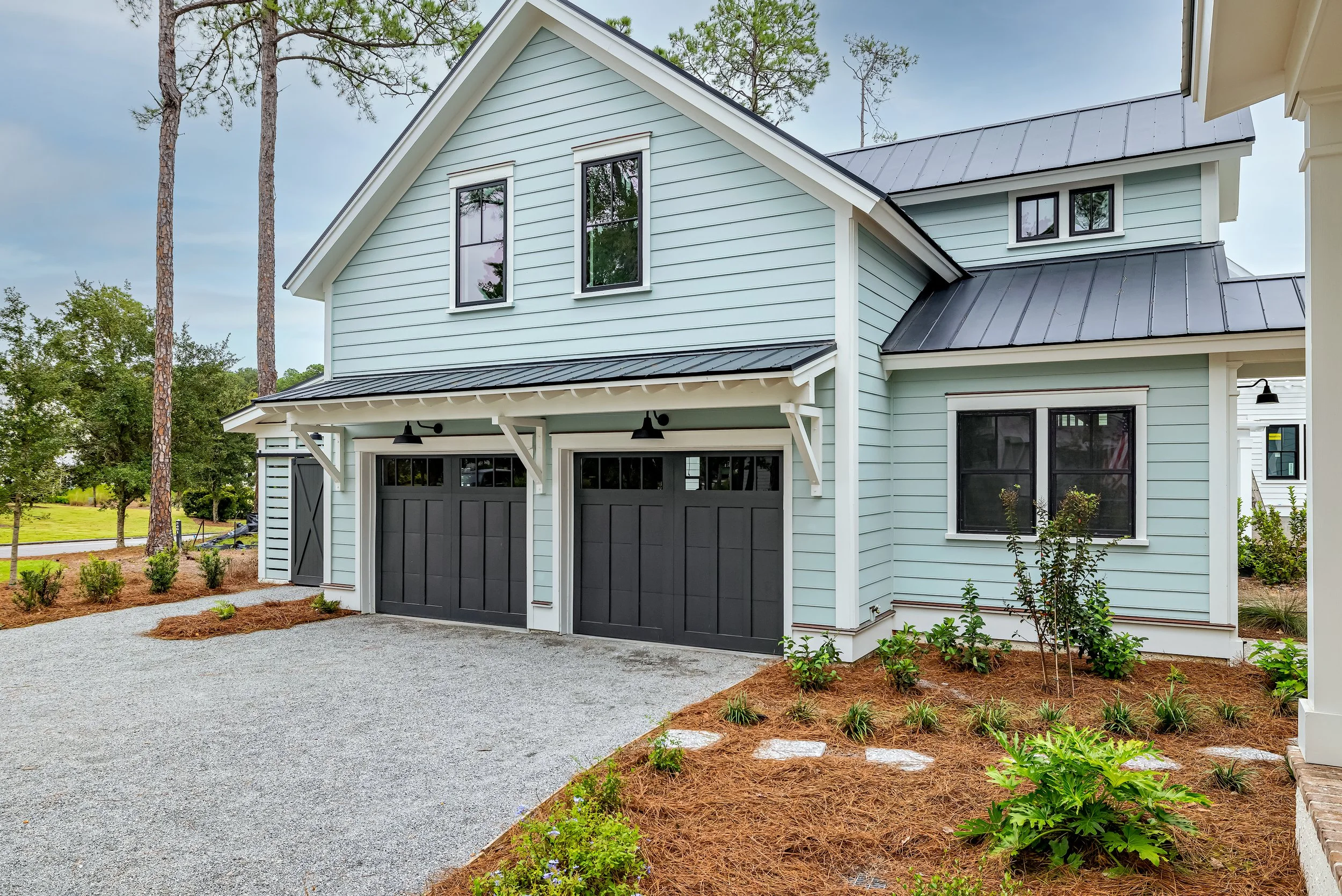
Premium siding and roofing directly counter the Lowcountry’s toughest stressors, salt air, humidity, UV, and storm winds, while improving energy efficiency and long-run cost control. Salt-laden wind accelerates corrosion on ordinary fasteners and penetrates weak joints. Driving rain exploits flimsy underlayments and thin coatings. Heat and humidity cause lower-grade materials to expand, contract, and warp. Premium systems introduce corrosion resistance, impact resistance, stable finishes, and better moisture management through materials such as metal roofing, fiber cement, and composite/PVC claddings.
The energy impact is immediate: reflective metal roof finishes can lower cooling costs by 10–25% during peak season. Lifespan gains are tangible, too. Metal roofing spans 40–70 years, synthetics deliver 30–50+ years of service, and upgraded asphalt systems add storm-ready wind performance. Installation governs whether you get the full benefit—aim for about 1 sq ft of net free vent area per 300 sq ft of attic, and use coastal-rated fasteners and underlayments to manage moisture and resist uplift.
Roofing that holds up to heat, humidity, and storms
For Bluffton, Hilton Head Island, and neighboring coastal communities, the right roof must shed heat, resist salt and wind, and stay put under gusts.
Metal roofing: Expect a lifespan between 40 and 70 years with far fewer reroofs. Reflective finishes help trim cooling costs by 10–25% in the Lowcountry’s long summers. The combination of longevity and efficiency makes metal a standout for homes close to salt marshes and ocean exposure.
Architectural asphalt shingles: As a cost-effective baseline, choose shingles with wind warranties up to 130 mph. Pair them with high-temp, sealed underlayment and corrosion-resistant fasteners to improve wind uplift resistance and water holdout during tropical rain bands.
Synthetic slate and shake: These options bring the coastal look without the structural weight, with typical service life of 30–50+ years. The lighter load can simplify design in high-wind zones while still delivering long-term durability.
Ventilation checklist: Design attic ventilation to roughly 1 sq ft of net free vent area per 300 sq ft of attic. Balance intake at the soffits with exhaust at the ridge to minimize heat buildup and moisture accumulation—a must for humid nights and rapid temperature swings after rain.
Siding built for salt, sun, and humidity
Siding has to do more than look good in the Lowcountry—it must resist water, stay stable in heat, and shrug off pests and UV.
Fiber cement: Engineered to resist moisture, rot, insects, and fire, fiber cement is well-suited to humid, storm-prone coasts. Its dimensional stability supports tight, long-lived cladding lines that hold their shape through seasonal humidity and daily thermal cycling.
Composite and PVC: Because they do not absorb water, composite and PVC claddings are highly resistant to rot, mold, and mildew—key benefits for marsh-adjacent neighborhoods and shaded elevations where surfaces stay damp longer.
Non-combustible options: Where homes sit close to property lines or near outdoor kitchens and fire features, non-combustible claddings add a meaningful safety margin.
Installation quality: Proper drainage planes, flashed penetrations, and manufacturer-specified fastening patterns keep bulk water out and maintain panel alignment. In the Lowcountry’s humidity, these details prevent trapped moisture, swelling, and premature finish failure.
Energy, insurance, and lifetime value
Premium exterior choices deliver measurable benefits beyond curb appeal.
Energy: Reflective metal finishes can trim cooling costs by 10–25% during the long Lowcountry summer, reducing strain on HVAC equipment and helping control monthly bills.
Replacement cycles: Moving from budget assemblies expected around 15 years to properly specified premium systems extending to 30+ years reduces lifetime reroofs and re-sides—an outsized advantage in a coastal environment.
Insurance: Impact- and wind-resistant roofs may qualify some homeowners for 10–30% premium savings. Check your carrier’s requirements, but the combination of storm-hardening and documentation can translate into durable policy discounts.
Resale: Appraisers and buyers recognize long-life, low-maintenance exteriors. Visible premium materials—metal roofs, fiber cement, and synthetic slates/shakes—signal durability and lower near-term capital expenditures, helping support valuations.
If you’re planning a whole-home project, aligning exterior performance with space planning and outdoor living can multiply these gains. See how integrated design comes together in our Building Your Dream Home approach.
Installation details that make or break performance
Material quality sets the ceiling; installation sets the floor. The Lowcountry’s mix of heat, humidity, and wind makes details non-negotiable.
Ventilation: Target about 1 sq ft of net free vent area per 300 sq ft of attic. Verify net area after baffles and screens, and balance soffit intake with ridge exhaust to keep attics cooler and drier.
Wind: Specify shingles with wind warranties up to 130 mph and use uplift-tested fasteners at manufacturer spacing, especially in edge and corner zones where pressures spike.
Water: Install continuous weather-resistive barriers, integrate head/lap flashings at all openings, and use ventilated rainscreens behind cladding to drain and dry after wind-driven rain.
Material pairings: Combine corrosion-resistant metals with non-absorbent claddings like composite/PVC or durable fiber cement to limit salt and moisture degradation at joints, trim, and fastener heads.
How a Lowcountry custom builder integrates these choices
Premium performance is the product of coordinated planning, structure, detailing, and finishes working together. As a design-build team in Bluffton and Hilton Head, Coastal Signature Homes aligns exterior specifications with architecture, site exposure, and lifestyle.
Design-build coordination: In-house plans and finishes streamline selections and shop drawings, so siding profiles, roof systems, and water-management details are resolved before installation—fewer handoffs, better outcomes for the Lowcountry climate.
Local expertise: We prioritize materials proven against humidity and coastal conditions and rely on trusted local craftsmen and vendors who understand code, wind zones, and salt exposure.
Scope clarity: We design and build custom homes; consultations focus on integrated, whole-home solutions rather than piecemeal product swaps. If you’re comparing builders, start with these tips for selecting a custom home builder in the Lowcountry.
Inspiration: Explore outdoor rooms, porches, and finishes suited to sun and salt in our portfolio.
Frequently Asked Questions
What roofing choice best balances cost and coastal performance?
Architectural asphalt shingles with wind warranties up to 130 mph offer a strong cost-to-performance baseline for many coastal homes. Stepping up to metal adds 40–70-year longevity and can deliver 10–25% cooling cost reductions—an attractive tradeoff for ocean- or marsh-exposed properties.
How much ventilation does my attic actually need?
Use about 1 sq ft of net free vent area per 300 sq ft of attic. Balance intake and exhaust so humid air has a path out; this curbs heat buildup, helps protect roof decks and insulation, and supports better HVAC performance.
Are synthetic slate or shake viable near the marsh?
Yes. Synthetic slate and shake typically last 30–50+ years and avoid water absorption issues common to natural materials in humid zones. Their lower weight eases structural demands while preserving the Lowcountry look.
Which siding stands up best to humidity and pests?
Fiber cement is engineered to resist moisture, rot, insects, and fire, making it a standout in the Lowcountry. Composite and PVC siding add non-absorbency that helps prevent rot, mold, and mildew where shade and salt air slow drying.
Ready to upgrade your exterior or plan a new build around coastal performance? Start a conversation with our team via our contact page.
References
Every figure in the article must come from this list. Edit or remove anything you don't trust; the writer never invents numbers.
[1] Reflective coatings on metal roofing can reduce cooling costs by 10–25%.: "Reflective coatings can reduce cooling costs by 10–25%." (cwsiding.com)
[2] Metal roofing lasts between 40 and 70 years.: "Lasts between 40 and 70 years, reducing the need for frequent reroofing." (cwsiding.com)
[3] Architectural asphalt shingles come with wind warranties up to 130 mph.: "Modern architectural shingles have thicker laminations that improve shadow lines and come with wind warranties up to 130 mph." (cwsiding.com)
[4] Proper roof ventilation is typically 1 sq ft of net area per 300 sq ft of attic space.: "Proper ventilation, typically 1 sq ft of net area per 300 sq ft of attic space, is necessary to prevent heat buildup and moisture accumulation." (cwsiding.com)
[5] Synthetic roofing materials typically last 30–50+ years.: "Typically 30–50+ years." (homegeniusexteriors.com)
[6] Upgrading from a 15-year roof to systems that protect for 30+ years is a key benefit of premium materials.: "a roof that lasts 15 years and one that protects your home for 30+ years." (lalondebuilders.com)
[8] Metal roofs can last 50+ years.: "can last 50+ years." (lalondebuilders.com)
[9] Some homeowners save 10–30% on insurance premiums with impact- or wind-resistant roofs.: "some homeowners save 10-30% on their premiums." (lalondebuilders.com)
[10] Fiber cement siding is designed to resist moisture, rot, insects, and fire.: "designed to resist moisture, rot, insects, and fire" (charleston.com)
[11] Composite and PVC siding do not absorb water, resisting rot, mold, and mildew.: "do not absorb water, making them highly resistant to rot, mold, and mildew" (charleston.com)
[12] James Hardie fiber cement siding is non-combustible and will not ignite or burn when exposed to direct flames.: "James Hardie siding will not ignite or burn when exposed to direct flames." (rennisonroofing.com)